Announcements

International Conference TRADITIONAL EPIGRAPHY: OCCASION, PURPOSE, EXPECTATION
17-11-2026 10:00 Traditional epigraphy: from petroglyphs to medieval writing systems Epigraphic structural types and stable formulas Interdisciplinary connections Inscribed monuments Writing and art Writing and language
 The conference will take place on November 17–19, 2026, in Yerevan and at the Wine History Museum of Armenia. The program will also include a tour of the museum and the newly built St. Cross church complex.
 The abstract, which should also include the participants’ academic degree and affiliation (if any), must be submitted by October 1 in two languages: Armenian and English.
 Applications should be sent to the email address: epigraphy@iae.am
 Drawing: Floral inscription on the eastern cornice of the Kathoghike Church of Harichavank Monastery, 13th century.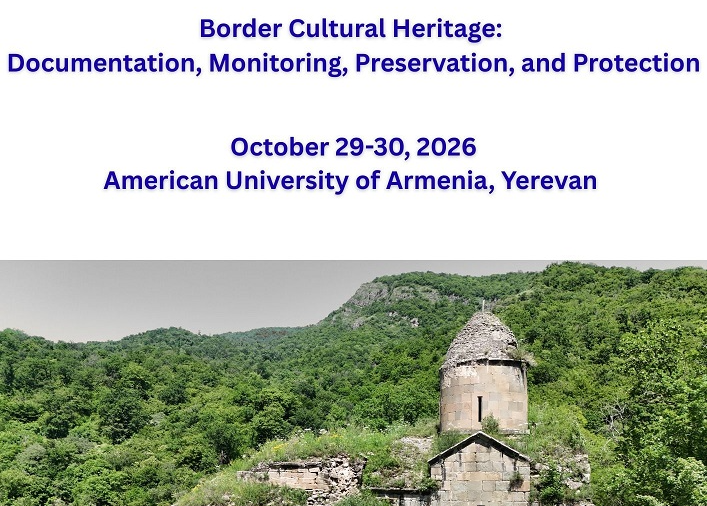
Tnternational conference: “ Border Cultural Heritage: Documentation, Monitoring, Preservation, and Protection ”
30-10-2026 09:00We are pleased to inform you that on October 29–30, 2026, an international conference titled “ Border Cultural Heritage: Documentation, Monitoring, Preservation, and Protection ” will be held at the American University of Armenia (Yerevan).
A field visit to Ijevan, Tavush region, is also planned for October 30–31.
The conference is organized by the Interdisciplinary Armenian Cultural Heritage Studies Program, the Institute of Archaeology and Ethnography of the National Academy of Sciences of the Republic of Armenia, the Centre for the Study of the Christian East at the University of Salzburg, as well as the Austrian and Armenian Blue Shield organizations.
The conference aims to explore the role of cultural heritage in border regions as an essential component of identity, memory, and social structure.
Main topics include:
- Documentation of cultural heritage
- Development of monitoring mechanisms
- Challenges of preservation
- Protection strategies, including the involvement of local communities and various institutions
Researchers wishing to participate are invited to submit an abstract (up to 300 words) and a short CV by May 30, 2026, to the following email address: bchc2026@gmail.com.
Working language:English
Presentation format: 20-minute presentation followed by a 10-minute discussion
The conference is supported by the RA Committee of Higher Education and Science (Project No. 23RL-6A006).
We warmly invite you to participate and contribute to the study and preservation of borderland cultural heritage.
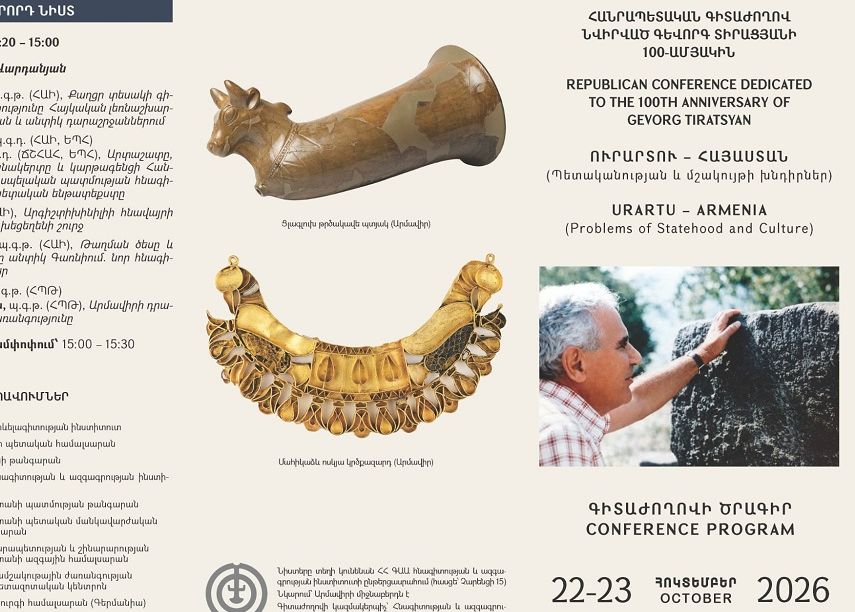
Conference: “Urartu – Armenia: Issues of Statehood and Culture”
22-10-2026 10:00On October 22 and 23 of this year, a conference dedicated to the 100th anniversary of the birth of the renowned archaeologist and historian Gevorg Tiratsyan will be held in the Reading Room of the Institute of Archaeology and Ethnography. The conference is entitled “Urartu – Armenia: Issues of Statehood and Culture.”
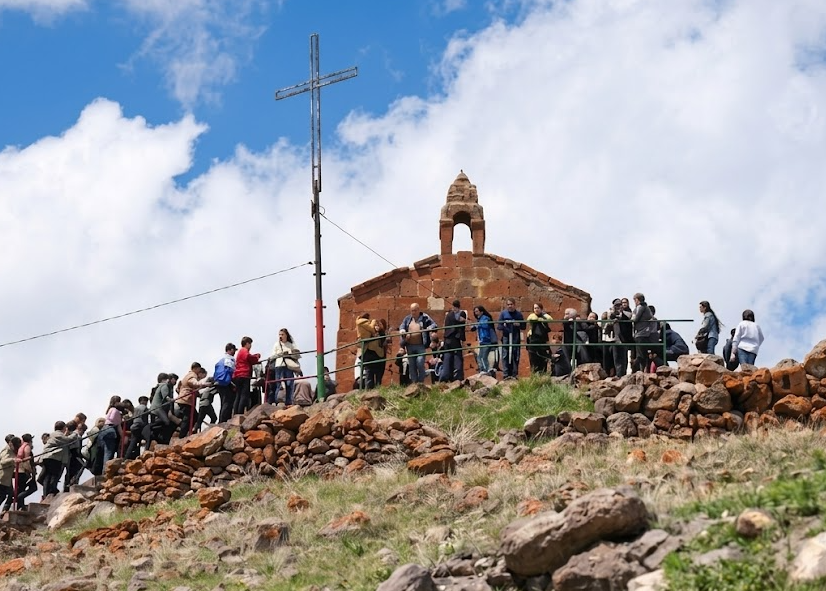
A Candidate Dissertation Defense of Liana Avetisyan on "Saint Stephen the Protomartyr in Armenian Religious Texts, Popular Perceptions and Contemporary Practices" Will Be Held at the Institute of Archaeology and Ethnography
04-08-2026 12:00The defense of the PhD dissertation entitled “Surb Stepanos Nakhavka (St. Stephen the Protomartyr) in the Armenian Religious Texts, Popular Perceptions and Contemporary Practices” by Liana Avetisyan will take place at the meeting of the Specialized Council 007 “Archaeology and Ethnography” operating under the Institute of Archaeology and Ethnography of the National Academy of Sciences of the Republic of Armenia (IAE NAS RA) on 4 August 2026 at 12:00 p.m.
The dissertation is devoted to the theological and historical examination of the figure of St. Stephen the Protomartyr in Armenian religious texts, as well as to the analysis of folk perceptions and contemporary manifestations of his cult within the context of present-day Armenia’s spiritual and ritual realities. The relevance of the study is determined by the need for a comprehensive and interdisciplinary investigation of hagiographic and ethnographic layers in Armenian studies, since the figure of the saint represents one of the key and multilayered phenomena of Armenian spiritual culture. The research is based on the identification of interrelations between the canonical literary tradition and popular beliefs, which makes it possible to reveal the transformation of Christian hagiographic texts in public consciousness within the framework of their functional and ritual reinterpretation. Through the examination of medieval homiletic, canonical, and historiographical primary sources, the dissertation systematizes and comprehensively presents the cult sites dedicated to the saint and the ritual practices associated with them.
In the contemporary period, the topic acquires particular significance in the context of rapid changes in religious functions, which makes the documentation and analysis of traditional forms of pilgrimage and festive-ritual culture, as well as their modern transformations, especially important. In addition, the examination of the saint’s image within a historical-geographical framework contributes to the revaluation of endangered or lost cultural heritage, substantiating the continuity of Armenian spiritual and cultural values, including elements of intangible cultural heritage.
Scientific supervisor:
- Hranush S. Kharatyan, PhD in Historical Sciences
Official opponents:
- Hakob M. Cholakyan, Doctor of Historical Sciences
- Hayk Ye. Hakobyan, PhD in Historical Sciences
Leading institution:
- Yerevan State University
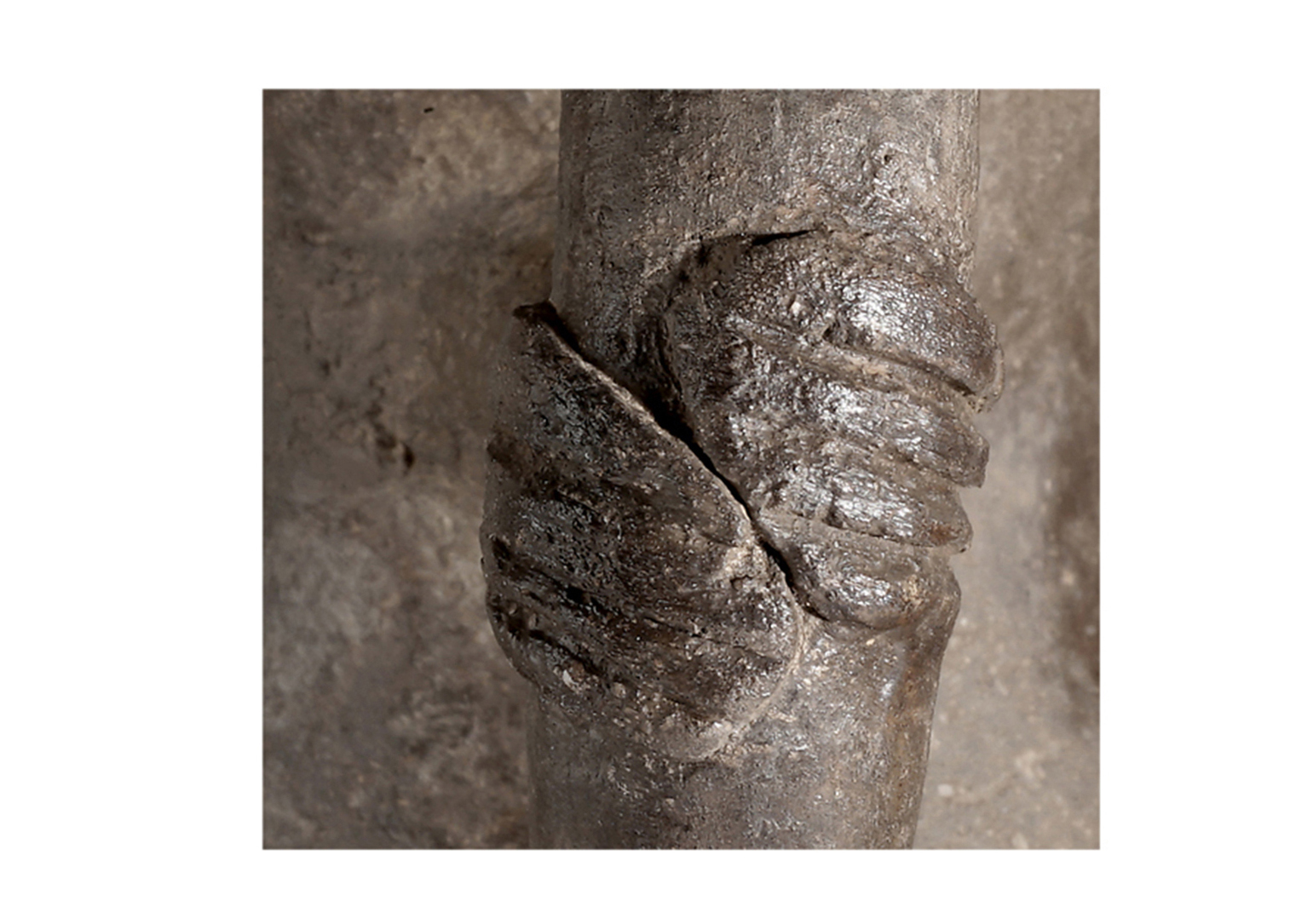
A Candidate Dissertation Defense of Lianna Avetisyan on "The Basin of Shnogh River in Iron Age (According to Newly Discovered Archaeological Data)" Will Be Held at the Institute of Archaeology and Ethnography
02-08-2026 14:00The defense of the PhD dissertation entitled “The Shnogh River Basin in the Iron Age (Based on Newly Discovered Archaeological Data)” by Ani Saratikyan will take place at the meeting of the Specialized Council 007 “Archaeology and Ethnography” operating under the Institute of Archaeology and Ethnography of the National Academy of Sciences of the Republic of Armenia (IAE NAS RA) on 4 August 2026 at 2:00 p.m.
The dissertation examines the Iron Age cemeteries located within the territory of the Teghut copper and molybdenum deposit of industrial significance in Lori Province, Republic of Armenia. These cemeteries are distributed along the Shnogh River, which flows through the mining area. The Shnogh River is one of the major tributaries of the Debed River. It originates on the forested northern slopes of the Gugark mountain range, passes through the territories of the villages of Teghut and Shnogh, and joins the Debed from the right bank at an altitude of 520 m above sea level.
In recent years, 311 burials have been excavated in the area: one Early Bronze Age burial (Pinjut No. 17), nine Late Bronze Age burials (Dukanadzor Nos. 1, 2, 3, 4; Bover 1 Nos. 47, 48, 49; Teghut 1 Nos. 1 and 2), and three medieval burials (Bagheri Chala Nos. 12, 13, and 14). A total of 298 burials belong to the Iron Age, of which 131 (43.96%) are included in the present study.
Scientific supervisor:
- Hayk G. Avetisyan, Doctor of Historical Sciences
Official opponents:
- Garegin S. Tumanyan, Doctor of Historical Sciences
- Artak V. Gnuni, Doctor of Historical Sciences, Associate Professor
Leading institution:
- History Museum of Armenia
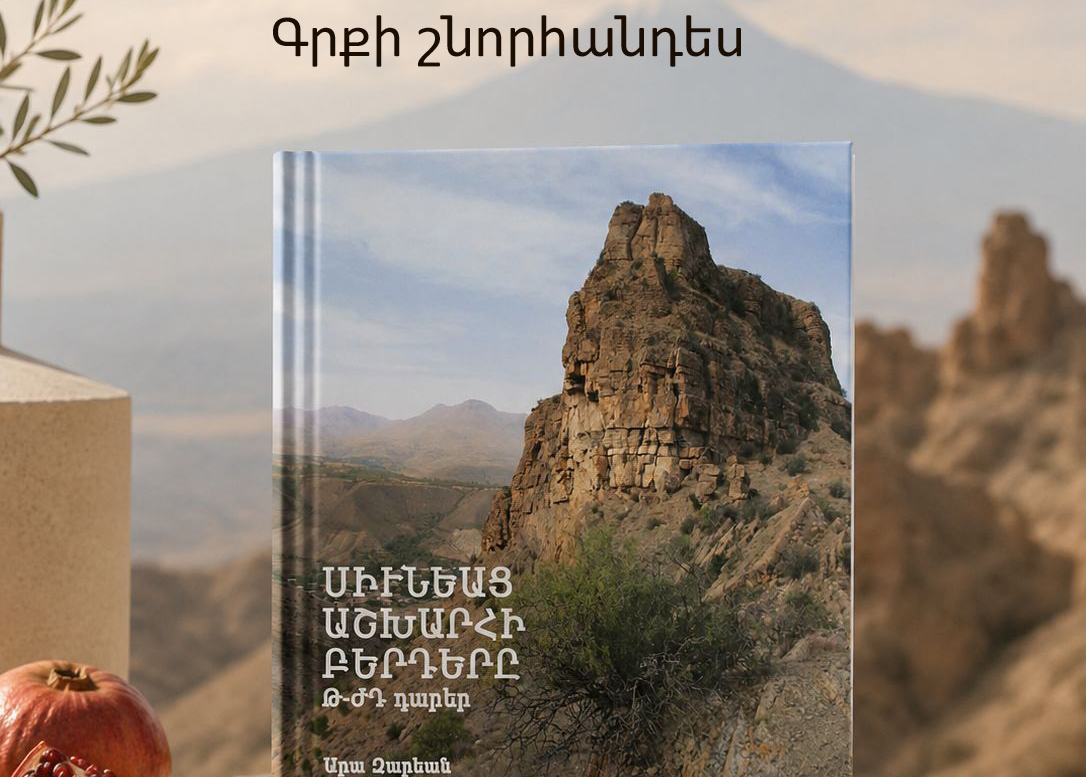
PhD Dissertation Defense: “Female Characters in the Armenian Epic Daredevils of Sassoun”
12-06-2026 12:30Dear Colleagues, we would like to inform you that on June 12, at 12:30 p.m., the Specialized Council 003 operating at the M. Abeghyan Institute of Literature of the National Academy of Sciences of the Republic of Armenia will hold the defense of the PhD dissertation of Alina A. Gharibyan, from the Department of Folk Textology of the Institute of Archaeology and Ethnography of the NAS RA. The dissertation, entitled “Female Characters in the Armenian Epic Daredevils of Sassoun”, is submitted for the degree in the specialty Ժ.01.05 – Folk studies
 Invitation to the Conference on “Feast and Festival Practeces as a Culturally Constructed Text of the Past and Present”
Invitation to the Conference on “Feast and Festival Practeces as a Culturally Constructed Text of the Past and Present”
12-06-2026 09:00The Institute of Archaeology and Ethnography of the National Academy of Sciences of the Republic of Armenia, within the framework of the project “Application of Traditional Cultural Heritage Manifestations in Politics: Opportunities and Suggestions”, and the Armenian Center for Ethnological Research “Hazarashen” are planning a conference/workshop on June 12-15, 2026, on the topic “Feast and Festival Practeces as a Culturally Constructed Text of the Past and Present”. The conference will take place on June 12 and 13, 2026, and the workshop on June 14 and 15. Reports submitted to the conference may relate to the following thematic areas:
- Armenian Traditional Calendar and Festival Culture in the Middle Ages
- Festivals and Festivals in the First Republic of Armenia (1918-1920)
- Festival Politics and Culture in the USSR and Soviet Armenia (1920-1990), Including Prohibited Holidays and Forms of Their Survival
- Festivals and Festival Culture in the Republic of Armenia, including official, traditional, and new holidays.
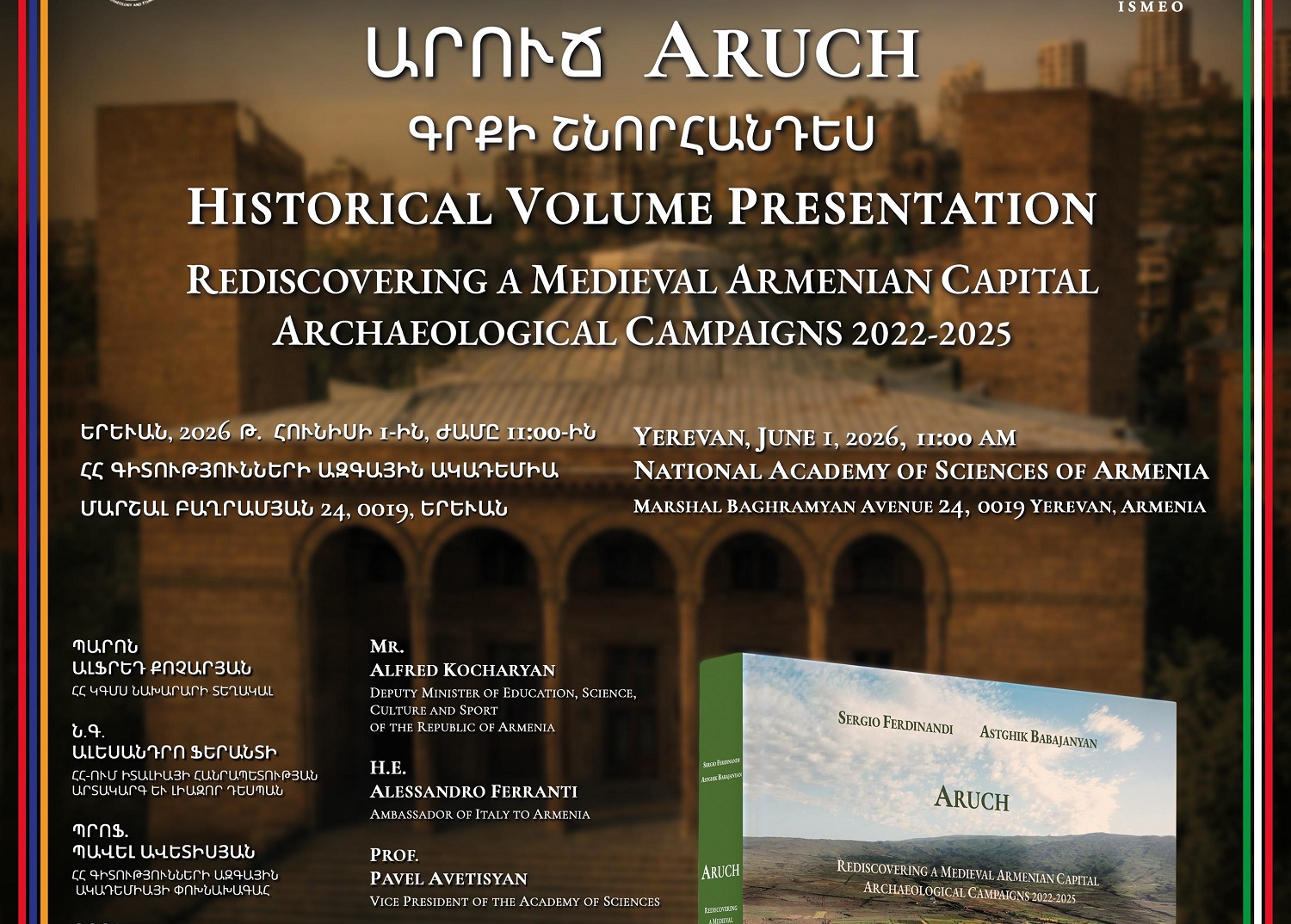
Presentation of the volume “Aruch: Rediscovering a Medieval Armenian Capital (Archaeological Campaigns 2022–2025)”
01-06-2026 11:00On June 1, 2026, at 11:00, the presentation of the volume “Aruch: Rediscovering a Medieval Armenian Capital (Archaeological Campaigns 2022–2025)” will take place in the Round Hall of the Presidium of the National Academy of Sciences of the Republic of Armenia (24 Baghramyan Avenue, Yerevan).
Welcoming remarks will be delivered by:
- Alfred Kocharyan, Deputy Minister of Education, Science, Culture and Sports of the Republic of Armenia
- H.E. Alessandro Ferranti, Ambassador of Italy to Armenia
- Pavel Avetisyan, Vice President of the National Academy of Sciences of the Republic of Armenia
- Adriano Valerio Rossi, President of ISMEO
- Arsen Bobokhyan, Director of the Institute of Archaeology and Ethnography, NAS RA
- Harutyun Vanyan, Head of the Department for the Preservation of Historical and Cultural Monuments, Ministry of ESCS RA
The volume will be presented by:
- Astghik Babajanyan, Institute of Archaeology and Ethnography, NAS RA; Director of the Aruch Archaeological Expedition
- Sergio Ferdinandi, Vice President of ISMEO; Director of the Aruch Archaeological Expedition; Responsible AICS Project for Aruch
This new scholarly volume, dedicated to the medieval historical and cultural heritage of Aruch, presents the results of four years of Armenian–Italian archaeological collaboration. It offers a comprehensive reassessment of the site as a major political, cultural, and economic center of medieval Armenia.
The study focuses on the medieval fortress within its broader architectural and cultural landscape, reconstructing its spatial organization, functional zones, and long-term patterns of occupation, reuse, and transformation from the Middle Ages to the Early Modern period. It emphasizes that Aruch, combining religious and secular authority and supported by a developed fortification and infrastructure system, was not merely a settlement or road stop, but a multifunctional and dynamic centre of medieval life.
The second section of the volume addresses cultural heritage as a sustainable driver of rural development. It presents ongoing programs for the preservation, restoration, and valorization of Aruch, with the aim of integrating archaeological research into heritage management strategies and advancing the creation of an eco-archaeological park.
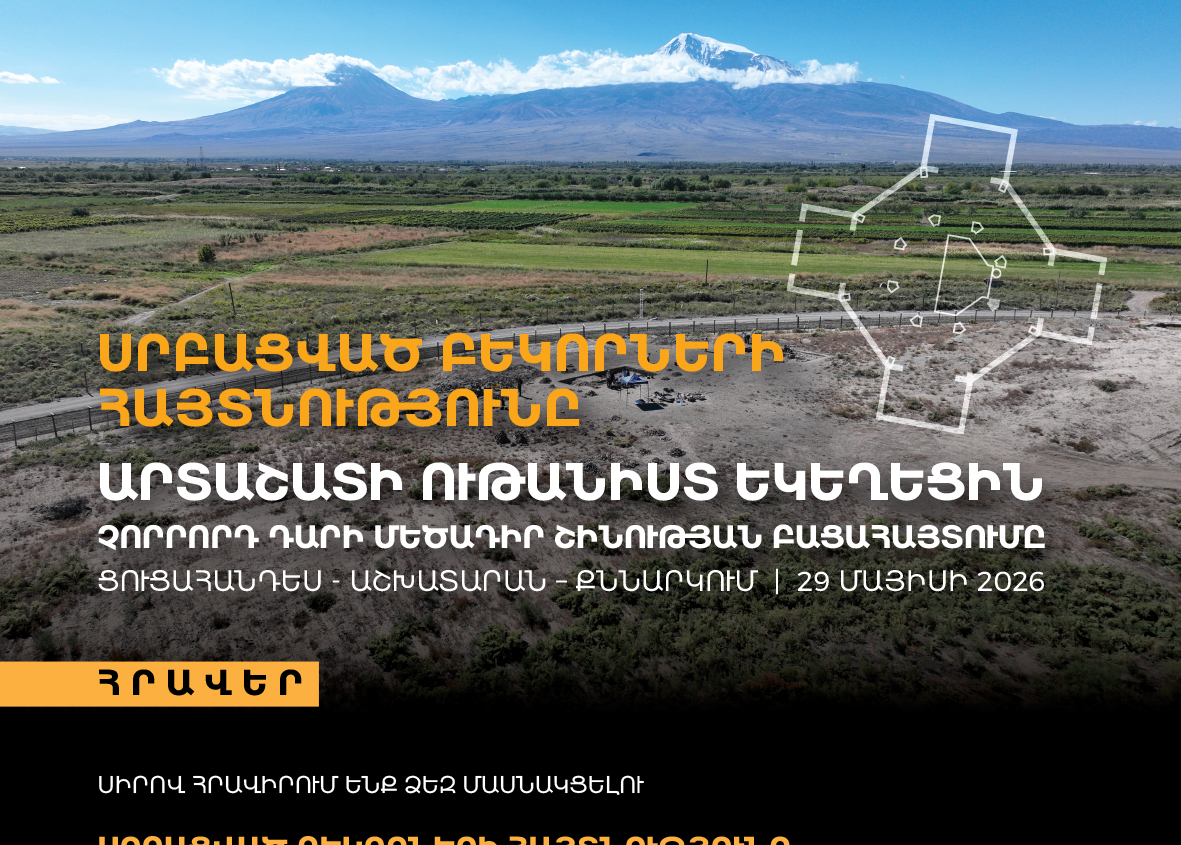
Exhibition-Workshop: “Revelation of Sacred Fragments: The Octagonal Church of Artashat. Discovery of a Monumental Fourth-Century Structure”
29-05-2026 10:00We are pleased to invite you to the opening of the exhibition and professional discussion titled “Revelation of Sacred Fragments: The Octagonal Church of Artashat. Discovery of a Monumental Fourth-Century Structure.”
The event will take place on May 29 of this year at 10:00 AM at Matenadaran.
This special event, jointly organized by the Institute of Archaeology and Ethnography of Armenia, the University of Münster, and the Matenadaran, will for the first time publicly present the results of the archaeological excavations of the recently discovered octagonal church at the archaeological site of Artashat, near Khor Virap.
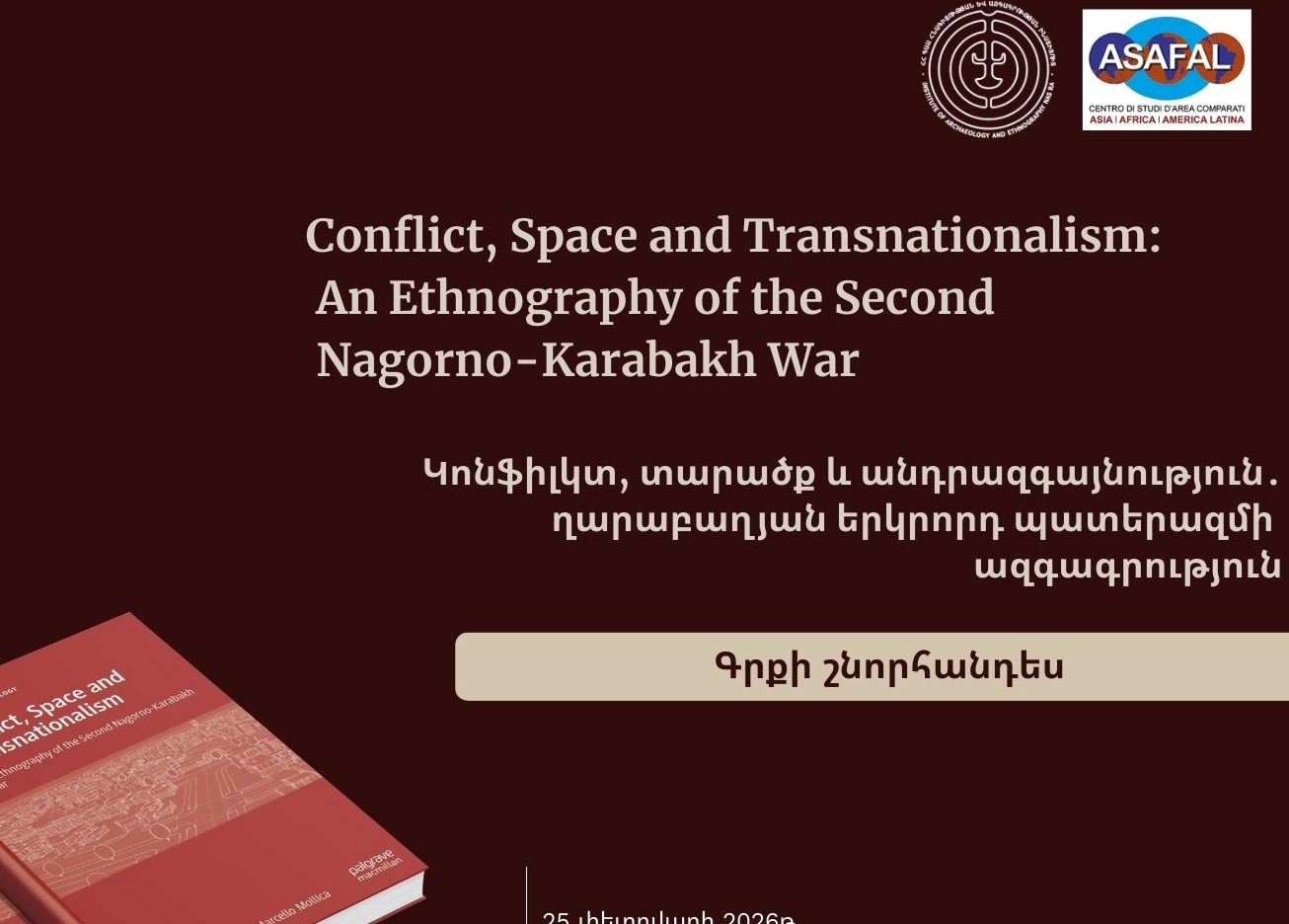
Book Presentation: "Conflict, Space and Transnationalism: An Ethnography of the Second Nagorno-Karabakh War"
25-02-2026 11:00The presentation of the book «Conflict, Space and Transnationalism: An Ethnography of the Second Nagorno-Karabakh War» [Palgrave Studies in Urban Anthropology, Palgrave Macmillan. 2025] by the authors Dr. Arsen Hakobyan (Institute of Archaeology and Ethnography, Armenia) and Dr. Marcello Mollica (University of Messina, Italy). The presentation will take place at 11:00 on February 25, in the Round Hall Presidium of the National Academy of Sciences of Armenia (2nd floor, 24, Marshall Baghramian Ave, Yerevan, 0019).
23rd Annual Armenian Studies Graduate Colloquium
21-02-2026 10:00Events Programme/ February 21/ March 7 – March 14
Saturday, February 21, 2026
Hosted by Martin Adamian, UCLA
- Opening Remarks
Nora Bairamian
Co-Director of the 2026 Graduate Student Colloquium in Armenian Studies
Near Eastern Languages and Cultures, UCLA
Dr. S. Peter Cowe
Narekatsi Professor of Armenian Studies
Near Eastern Languages and Cultures, UCLA
- Medieval Art and Scribal Praxis
Moderator: Nora Bairamian, UCLA
Ovsanna Khachatryan (Mashtots Matenadaran Inst. of Manuscripts)
“Cryptographic Traditions in Medieval Manuscripts: Cultural Secrecy and Intercultural Comparisons”
Michael Blomquist (East Illinois University)
“The Iconography of Armenian Art and its Relationship with Increased Figural Representation in Two Islamic Traditions”
- Armenian Activities in the Ottoman and Russian Empires in the 19th and Early 20th Centuries
Moderator: Lori Pirinjian, UCLA
Sahika Karatepe (Binghamton University, SUNY)
“Extractivism and Rural Labor in Bardizag: Charcoal Production and the Armenian Peasantry (1790–1890s)”
Mete Ulatas (Pennsylvania State University)
“Spaces of Confinement, States of Becoming: Armenian Political Prisoners in the Late Ottoman Empire”
Irina Badalyan (Yerevan State University)
“Tiflis in the Second Half of the 19th Century: Armenological Perspectives and Urban Self-Governance Institutions in the Context of Imperial and National Projects”
Saturday, March 7, 2026
Hosted by Martin Adamian, UCLA
- Prehistoric Archaeology of the Armenian Plateau
Moderator: Aram Ghoogasian, UCLA
Mariam Saribekyan (Armenian Academy of Sciences)
“Beliefs and Lifestyle of Early Bronze Age People in Armenia Based on Clay Figurines”
Artyom Ananyan (Yerevan State University)
“Modelling the Bronze and Iron Age Archaeological Landscape of the Tavush Region through GIS Analysis”
- Ethnonational Imaginary and Culture
Moderator: Aram Ghoogassian, UCLA
Cassandre Lejosne (University of Lausanne)
“Copying Zvart‘noc‘: Architectural Models between Medieval Memory and Modern Heritage”
Margarita Khakhanova (Masaryk University)
“Hidden Soviet Ideology: The Construction of the Armenian Capital”
Jonathan Hollis (East Illinois University)
“Listening to Armenian Baku: History and Memory in Digital Diaspora”
Saturday, March 14, 2026
Hosted by Martin Adamian, UCLA
- Armenian Media in a Modern and Contemporary Timeframe
Moderator: Alexia Hatun, UCLA
Armenuhi Muradyan (University of Halle-Wittenberg)
“Armenian Women Between Empires: the Earliest Contributions to Print Media”
Diana Ghazaryan (Pázmány Péter Catholic University)
“Mediating in the Empire(s): The Krikorian Studio and Armenian Social Agency through Visual Culture in Ottoman and Mandate Jerusalem”
Ani Kojoyan (Yerevan State University)
“Language, Power, and Gendered Disinformation in Contemporary Armenian Public Discourse”
